Détail A2 · Glenoid implant design & optimizationEn cours
A shoulder implant that stays in place
In a total shoulder replacement, the glenoid component (the socket side) can loosen over time. It is one of the most common causes of failure. Our team is working toward a design that resists it.
9 biomechanical & FE studies reviewed
3 project phases
Problématique
Glenoid loosening is one of the most common causes of failure in total shoulder replacement. How can the implant’s design reduce it?
Équipe et rôle
Georges Charpak Institute of Human BiomechanicsPartner institute
Méthodologie et démarche
- Literature review. A critical review of nine biomechanical and finite-element studies on glenoid loosening.
- Modeling. A finite-element model of a cemented glenoid implant.
- Lab testing. Testing the cemented implant to validate the model and guide a new design.
Résultats
Project in progress, in collaboration with the Georges Charpak Institute of Human Biomechanics.
Voir aussi
Projets associés
A1En coursHelicon (ABEP) & ECR feasibility study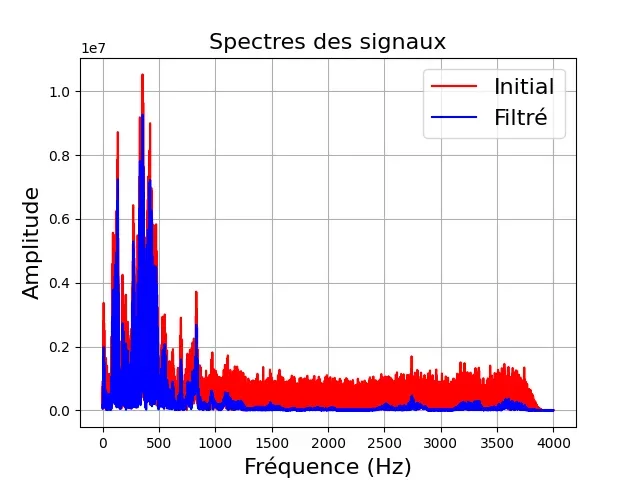 A4TerminéTIPE research project
Air-breathing plasma thruster for CubeSats
Using the thin upper atmosphere as propellant to keep very-low-orbit satellites aloft.
Datesept. 2026 – aujourd’huiÉquipe7-person teamDétail →A4TerminéTIPE research projectRecovering a voice from a noisy recording
I compared digital filters with spectral subtraction, tuned the method to remove its artifacts, then made it run live on a microphone feed.
Datesept. 2024 – juil. 2025Équipe2-person teamDétail →